
Hernia Surgery
Open and laparoscopic repair for inguinal, umbilical, ventral, and incisional hernias, restoring comfort and preventing complications.
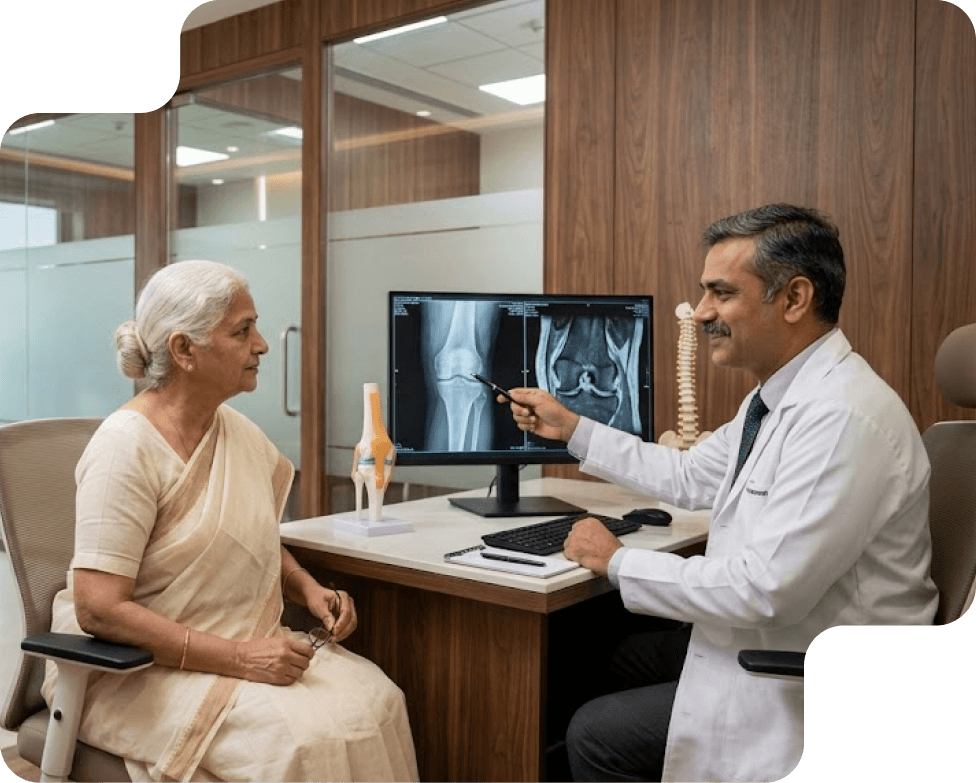
Understanding Hernia Surgery
A hernia occurs when tissue pushes through a weak spot in the abdominal wall, causing a visible bulge. While some small hernias can be monitored, most benefit from surgical repair to relieve symptoms and prevent complications like strangulation.
Conditions We Treat
Inguinal Hernia
The most common hernia type, occurring in the groin, more frequent in men.
- A bulge is visible in the groin
- Bulge grows larger when standing or straining
- Discomfort increases with activity
Umbilical Hernia
A bulge near the belly button caused by weakness in the abdominal wall.
- Swelling appears around the navel
- Bulge is more noticeable when coughing or straining
- Discomfort is felt around the area
Ventral Hernia
A hernia occurring anywhere along the front of the abdominal wall.
- A bulge appears on the abdomen
- Pain increases with lifting or bending
- Bulge changes size with position
Incisional Hernia
A hernia developing at the site of a previous surgical incision.
- Bulging near a past surgical scar
- Discomfort at the incision site
- Bulge is enlarging over time
Hiatal Hernia
Part of the stomach pushes up through the diaphragm, often linked to acid reflux.
- Frequent heartburn or acid reflux
- Chest discomfort after eating
- Difficulty swallowing
Strangulated Hernia
A hernia where blood supply to the trapped tissue is cut off — a surgical emergency.
- Sudden, severe pain at the hernia site
- Bulge becomes red, firm, or cannot be pushed back
- Nausea, vomiting, or fever accompany the pain
Recovery & Rehabilitation
From diagnosis to a comfortable recovery, hernia care progresses through clear stages.
Assessment
Confirm the Hernia
Physical examination, and imaging where needed, confirms the type, size, and location of the hernia.
Treatment
Repair the Defect
Laparoscopic or open mesh repair is chosen based on hernia type, size, and patient factors.
Recovery
Early Mobilisation
Most patients are encouraged to walk within a day, with reduced pain and scarring after laparoscopic repair.
Follow-up
Return to Normal Activity
Gradual return to lifting and exercise is guided by your surgeon to support lasting repair.
Hernia Surgery questions
Get answers about hernia repair, mesh surgery, and recovery.
No, a hernia will not close on its own. Small, symptom-free hernias may be monitored, but surgery is the only way to permanently repair the defect.
You may benefit from a hernia consultation if:
- A bulge is visible under the skin
- The bulge grows with standing or straining
- Discomfort increases with activity
- You have had a hernia repaired before
- The area has become red, firm, or very painful
Repair is recommended early to avoid complications
Most hernias are advised to be repaired electively before they enlarge or cause complications, using the technique best suited to your hernia and health.
Need help deciding? Our Care Guide can help you choose the right specialist or hospital.
Emergency care when every minute matters.
Round-the-clock emergency, trauma and critical care teams, ready ambulances and rapid response across our Patna and Begusarai units.
24×7 Emergency
Always-staffed emergency rooms in Patna & Begusarai.
Ambulance
Rapid ambulance dispatch, 24/7 emergency support.
ICU & Critical Care
Advanced life support and intensive care.
Cardiac Emergency
Heart-attack and chest-pain response pathway.
Stroke / Neuro
Time-critical stroke and neuro emergency care.
Trauma & Accident
Trauma team for accident and injury cases.